

1
/
of
1
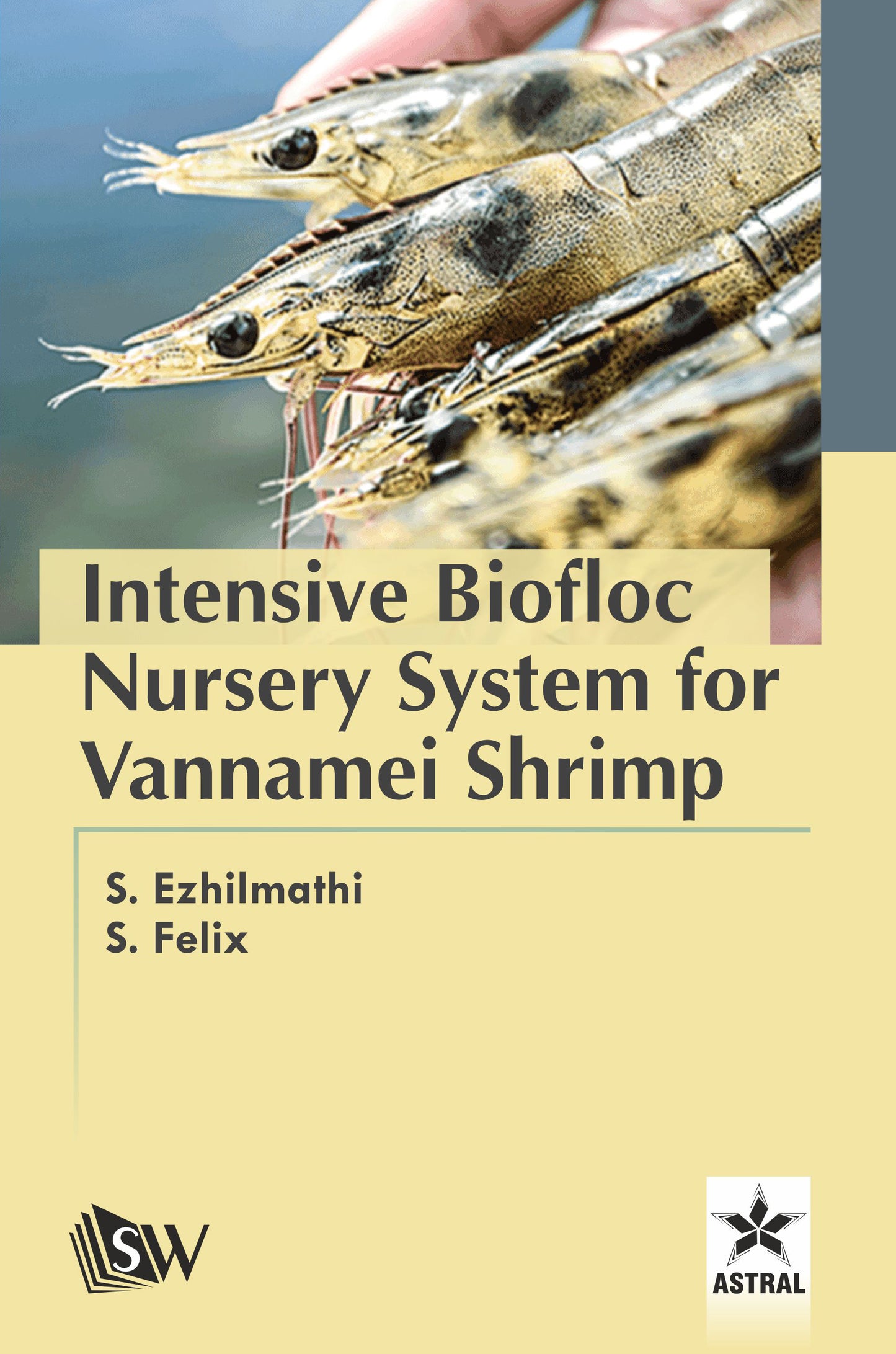
Intensive Biofloc Nursery System for Vannamei Shrimp By S Ezhilmathi
Intensive Biofloc Nursery System for Vannamei Shrimp By S Ezhilmathi
Regular price
Rs. 755.00
Regular price
Rs. 795.00
Sale price
Rs. 755.00
Shipping calculated at checkout.
No reviews
Quantity
Couldn't load pickup availability
Product details
Publisher : Scholars World
Author : S Ezhilmathi, S Felix
Language : English
Edition : Latest By Publishers
Book Cover : Hard Back
ISBN : 9789390435944
Table of Content
Preface v Acknowledgments vii 1. Introduction 1 2. Review of Literature 5 2.1 Nursery Rearing of shrimp 5 2.2 Shrimp nurseries in Raceways 6 2.3 Aerobic microbial floc technology 6 2.4 Management of AMF 7 2.4.1 Distillery spent wash 8 2.5 Insitu biofloc culture 8 2.6 Exsitu biofloc culture 9 2.7 AMF as a feed for different aquaculture species 9 2.8 Nutritional profile of AMF 10 2.8.1 Proximate composition 10 2.8.2 Fatty acid and amino acid profiling of AMF 10 2.8.3 Bioavailability of AMF 11 2.9 Extracellular enzyme activity of AMF 12 2.10 Digestive enzyme activity of AMF 12 2.11 Physical and chemical characteristic of AMF 12 3. Materials and Methods 15 3.1 Site of the experiment 15 3.2 Experimental design 15 3.3 Statistical analysis 15 3.4 Experimental setup 15 3.4.1 Configuration of nursery raceways 15 3.4.2 Water source and treatment 15 3.5 Aerobic microbial floc (AMF) production16 3.5.1 Insitu treatment 16 3.5.2 Distillery spent wash as novel carbon source 16 3.5.3 Calculation of carbohydrate requirement 17 3.5.4 Exsitu feed formulation 17 3.5.5 Feed and feeding management 18 3.6 Stocking of shrimp seed 19 Plate 1 AMF meal production in raceway 20 Plate 2 Exsitu feed production 21 3.7 Media chemicals and Glasswares 22 3.8 Water quality 22 3.8.1 Microbiological parameters 22 3.9 Growth analysis 22 3.9.1 Percentage weight gain 22 3.9.2 Specific growth rate 23 3.9.3 Feed convention ratio 23 3.9.4 Feed efficiency ratio 23 3.9.5 Protein efficiency ratio 23 3.9.6 Survival rate 23 3.9.7 Quantification of DNA and RNA ratio in muscle 23 3.9.8 Proximate analysis 24 3.9.9 Moisture 24 3.9.10 Crude protein 24 3.9.11 Ether extract 24 3.9.12 Ash 24 3.9.13 Organic matter 25 3.9.14 Gross energy 25 3.9.15 Total carbohydrate 25 3.9.16 Digestibility Energy 25 3.9.17 Amino acid and Fatty acid 25 3.9.18 Evaluation of EAA 25 3.10 Enzyme analysis 25 3.10.2 Lipase 26 3.10.3 Amylase 26 3.10.4 Protease 26 3.10.5 Cellulase 26 3.11 Floc parameters 27 3.11.1 Specific surface area determination 27 3.11.2 Dehydrogenase activity 27 3.11.3 Floc Density Index 28 3.11.4 Floc concentration 28 3.11.6 Floc Volume Index 28 3.11.7 Pore volume 28 3.11.8 Porosity 28 3.11.9 Floc Settling velocity 28 3.11.10 Floc Pore Radius 29 3.12 Apparent digestibility 29 3.13 Economics 29 4. Results 31 4.1 Water quality parameters 31 4.2 Microbial activity in culture water 32 4.3 Growth parameters 38 Plate 3 Experimental animal 42 Plate 4 Experimental unit 43 4.3 RNA DNA Ratio 44 4.4 Extra cellular enzyme activity 45 4.5.1 Digestive enzyme activity between Treatments and Visceral organs 46 4.5.2 Biochemical composition 47 4.5.3 Biochemical composition of shrimp 48 4.5.4 Biochemical composition of shrimp feed 48 4.5.5 Amino acid profile 50 Plate 5 Floc images 56 4.7 Economic viability 56 5. Discussion 59 5.1 Water quality parameters 59 5.1.1 Microbiology parameters 60 5.2 Growth parameter 60 5.2.1 Quantification of RNA - DNA ratio in muscle 60 5.3 Biochemical composition 61 5.3.1 Biochemical composition of AMF 61 5.3.2 Biochemical composition of feed 62 5.3.3 Biochemical composition of shrimp 62 5.3.4 Amino acid profile 62 5.4 Digestive enzyme activity 63 5.5 Extracellular enzyme activity 64 5.6 Apparent digestibility and Bioavailability 64 5.7 Floc parameter 65 5.8 Economic analysis 66 6. Summary and Conclusion 69 6.1 Further studies and recommendation 70 7. References 73
Materials
Materials
Paper
Shipping & Refunds
Shipping & Refunds
Share




1
/
of
4